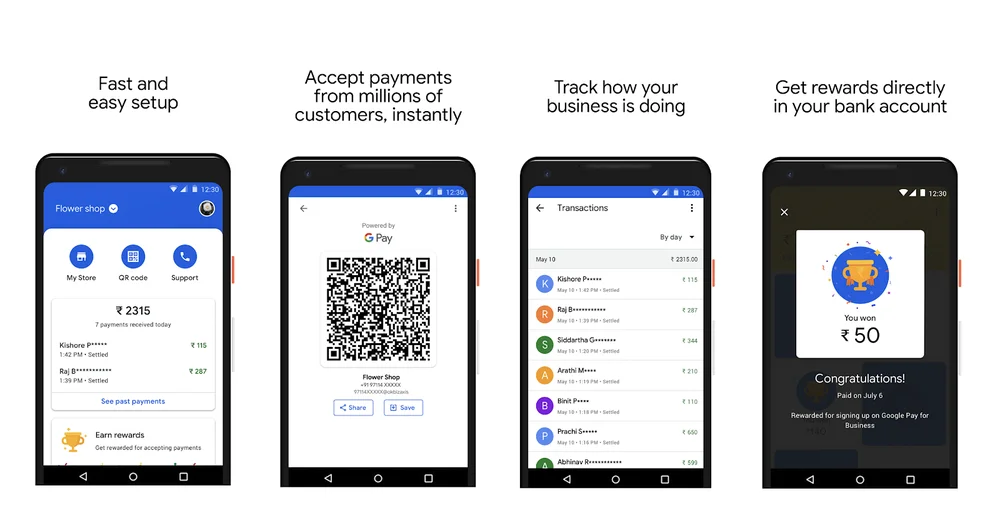
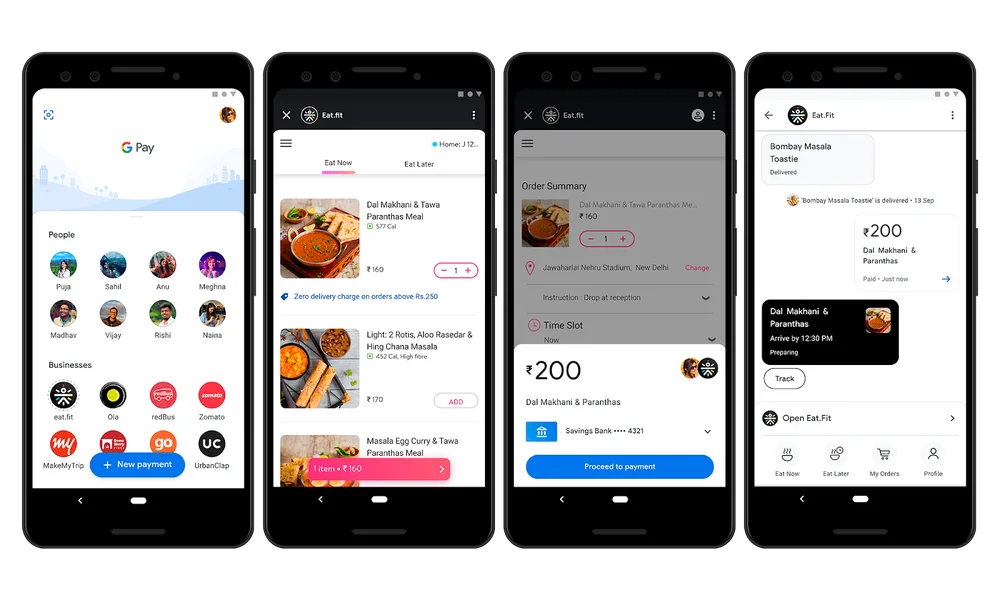
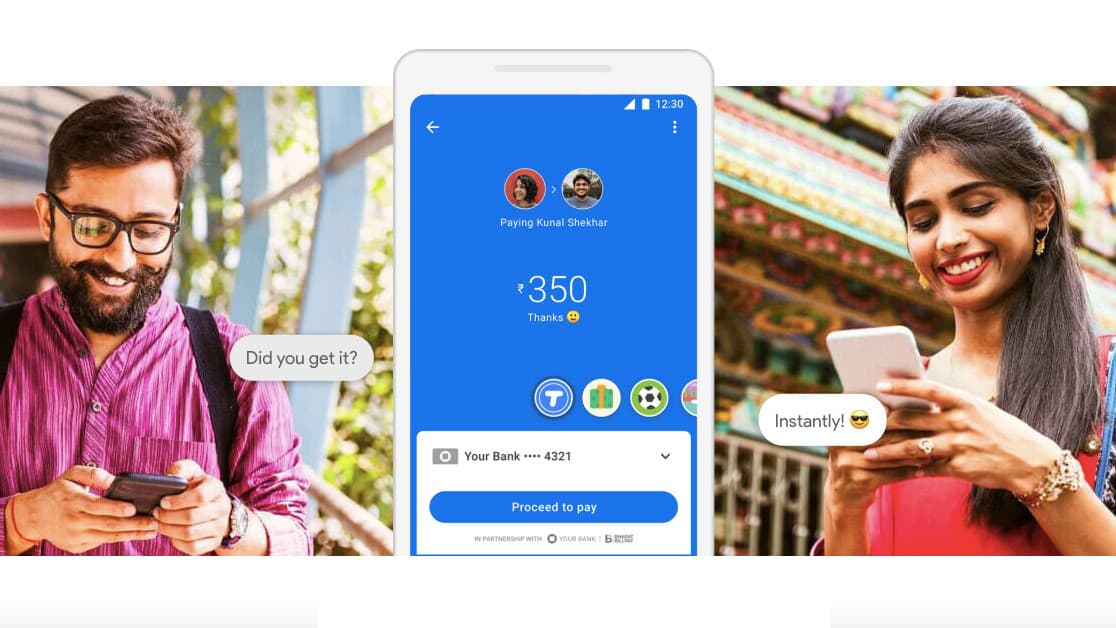
Tez was a mobile payments service by Google built for users in India. As the sole designer leading up to launch, I partnered with 7 product managers and 30+ engineers to design the app from the ground up—defining its foundations, architecture, design language, end-to-end user journeys, and early growth flywheels that made Tez one of the fastest growing Google products of all time.
Co-invented novel user experiences that temporarily establish a handshake between two devices to facilitate payment between them without ever sharing any personal information or leaving any trace of identity after payments — dubbed Audio QR.
Designing Tez meant deliberately breaking Google's established design conventions. The target user was often discovering the internet for the first time — on a sub-$100 Android device, in a language that wasn't English, with no prior mental model of digital payments. Mapping interactions to familiar, real-world behaviours (cash exchange, in-person trust signals, physical proximity) consistently mattered more than adhering to platform norms built for a different user entirely.
As part of the Next Billion Users initiative, shaped design patterns and practices for designing at this scale: drove field immersions, facilitated primary research with first-time internet users across India, and ran design sprints to stress-test assumptions before they became architecture decisions.
Architected a bespoke design system for the Indian audience at launch. Successfully advocated for these patterns to be adopted by central Material Design leadership and scaled across Google's global ecosystem.